


The bill for Ai came due this week and none of it landed where I keep expecting it to as a courtroom win read more like a surrender, and a young writer even got told to prove he's human before anyone would ask him a single question. This was the week the burden of proof quietly changed hands ⬇️
Start with the number everyone kept repeating; A billion and a half dollars is what Anthropic agreed to pay authors whose pirated books trained its models, and a judge gave that final approval this month. Read past the headline and it gets stranger. It works out at roughly three thousand dollars a title, and the writers who fought hardest sound the least triumphant. Charles Graeber, one of them, told St. Louis Public Radio he was proud the class had held together against a Goliath, then added, "I'm much poorer for this settlement, ironically." The part that'll matter for years isn't the cheque. The judgment underneath it treats training on copyrighted books as fair use so long as the copies were bought rather than stolen, which hands every other lab a map. A payout that looks like justice, working like a licence.
Then a story that's been eating at me since Thursday about a young Black PhD student who sold his debut crime novel, Call Me, I'll Hide the Body, to Minotaur Books for around two and a half million dollars, with film interest circling. After the contract was signed, his own literary agent ran an Ai-detection check, the software flagged something, and the publisher pulled the deal. No passage named, no specifics offered, just a machine's hunch. The writer says he never touched Ai and that nobody asked him a thing before it fell apart. Showbiz411 has him saying, "I was on the verge of success, and then all of a sudden, there were rumours, but no one asked me anything. I don't know why my agency did not have my back." Whatever the truth of his manuscript, look at where the weight landed. He has to prove a negative, against a tool nobody will let him cross-examine.
I’ve already had similar comments about my book on social media; “it reads like Ai generated it” to which I have to occasionally ask people to go and read my debut book from 2016 which reads in a similarly robotic way. It’s just how I write. I’m a bad writer 😆
The same reflex ran the other way at San Diego Comic-Con where a slide in the art book for the new Avatar: Aang animated film cited ChatGPT for background on Southeast Asian faces and beards, and a chunk of the internet decided the whole production was machine-made. It wasn't. The visual development artist Kat Tsai said flatly there was "Absolutely no AI whatsoever in the art / design process," and the production designer put the ChatGPT line down to one researcher poking at it early and never again. Comics Beat walked through the whole mess. Two things stuck. A crowd was ready to torch a hand-drawn film over a single citation, which is what a year of broken trust does to a room. And the actual Ai contribution here was a confident, shaky claim about a real culture, waved through as research. That's the failure mode nobody thinks to panic about.
Against all of that, one outfit drew a line worth copying, and I've been watching this one build since earlier in the month. Patreon, where a large slice of working comic artists actually earn a living, switched on Cloudflare's blocking so Ai training crawlers can't scrape members' posts by default, while leaving alone the crawlers that help readers find you. Its chief executive, Jack Conte, put it in words a picket line could borrow: "Creators deserve credit, compensation, and consent. If that's not on the table, the crawlers can stay off Patreon." It's the opposite instinct to the settlement. One says take it first and pay something afterwards, then call that fair. The other asks at the door, before anything moves. I know which one I'd want written into a contract. 404 Media has the detail.
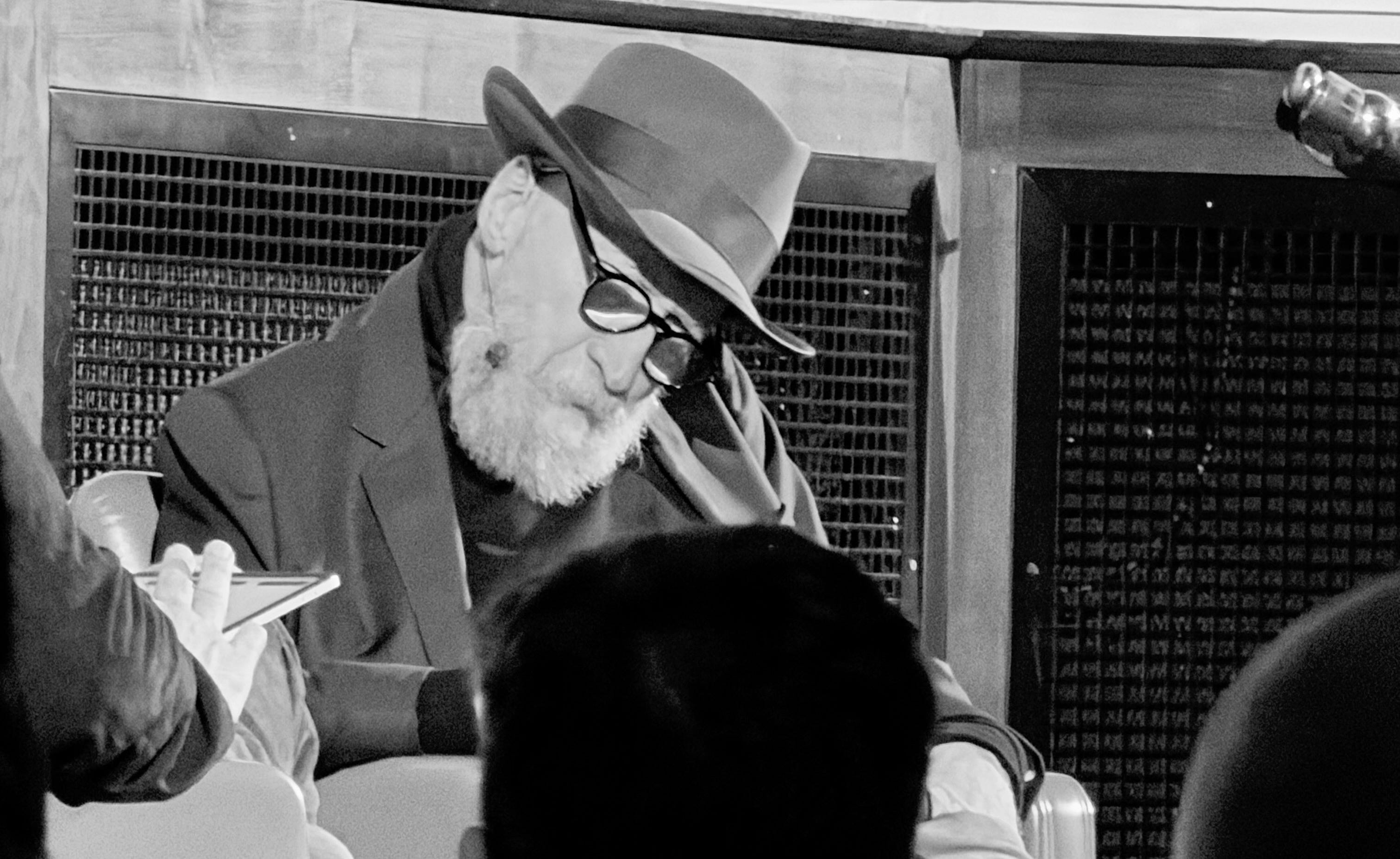
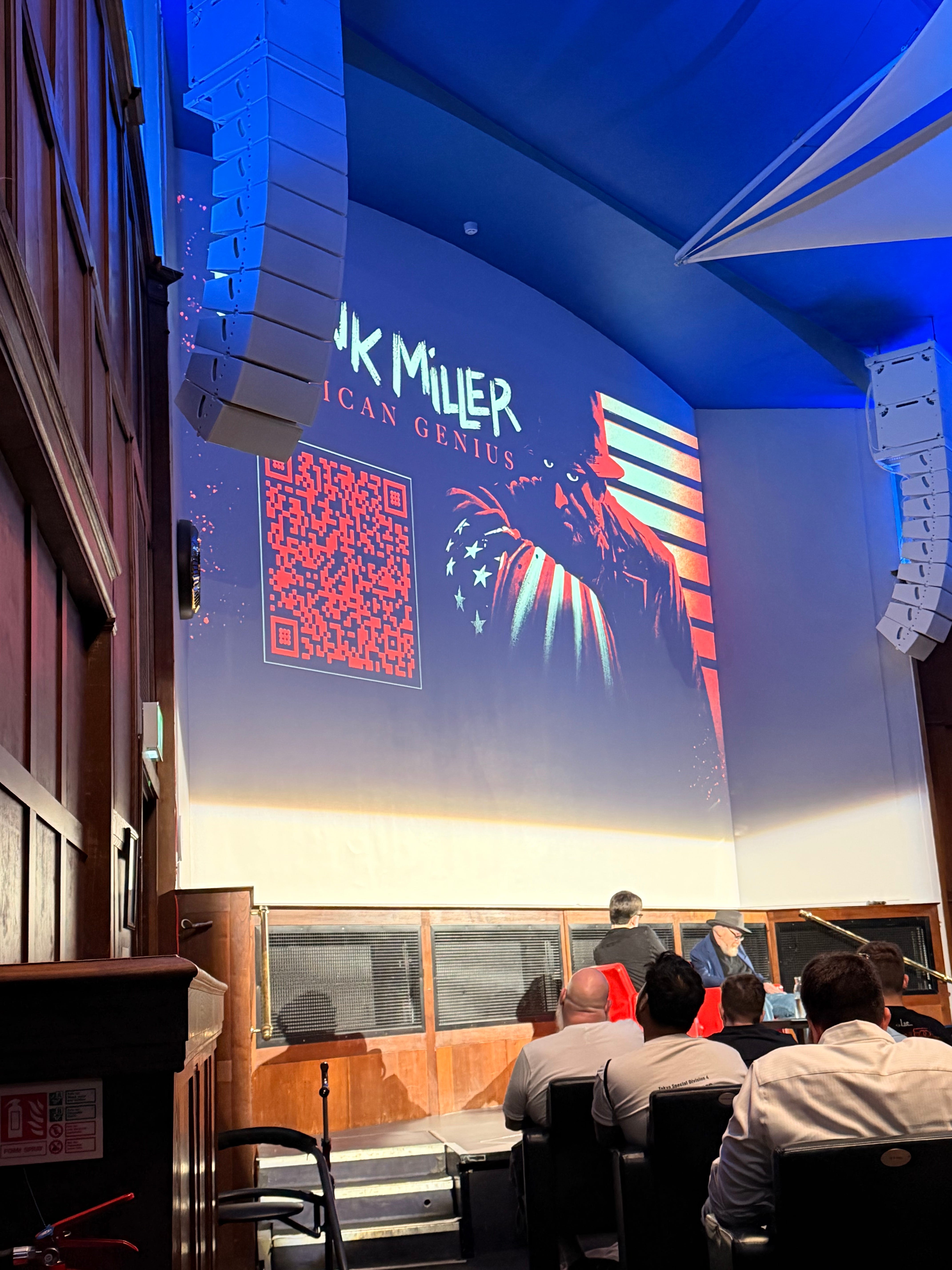
I got to test all of this in person last night. Frank Miller, the man who redrew Batman with The Dark Knight Returns and built Sin City panel by black-and-white panel, sat down in conversation at the Royal Geographical Society here in London, and someone asked him about Ai. He didn't hedge. "Ai can't be creative. Isn't intelligent," he said, and the room applauded the way rooms do when someone says the plain thing out loud. What got me was where he took it next. He agreed with a line from my own book, that "Ai doesn't make the mistakes people make and it's mistakes that make comics and creators what they are and who they are." Coming from Frank, who's spent fifty years turning his own mistakes into a style nobody can copy, that landed harder than any lawsuit.
There's a small thing in my own book that's been nagging at me all week. On the copyright page, under the ISBN, I printed a plain line: "No Ai was used to write the words, themes or prose for this work." I meant it as a promise. This week it reads more like a hostage note. Falade offered his editors the same assurance and it counted for nothing the moment a detector disagreed. I'd opened the book with Stephen King, from The Tommyknockers, "intelligence and determination can create some great forgeries." I put that there to describe the machines. I didn't expect to watch it turned on the people making the real thing.
What I want to know next is what a fair authentication test even looks like, because the demand for one isn't going anywhere, and right now it's being built by the same people who scraped the libraries. If proving you're human becomes a condition of getting published, I'd rather the proof wasn't a detector whose false positives can end a debut before it starts. That's where I'll be looking.
Further reading & Sources
Authors have mixed feelings about the $1.5B Anthropic copyright ruling: St. Louis Public Radio
A debut crime novel's deal collapses after an Ai-detection check: Showbiz411
The Avatar Aang ChatGPT controversy at SDCC, explained: Comics Beat
Patreon partners with Cloudflare to block Ai training crawlers: 404 Media