


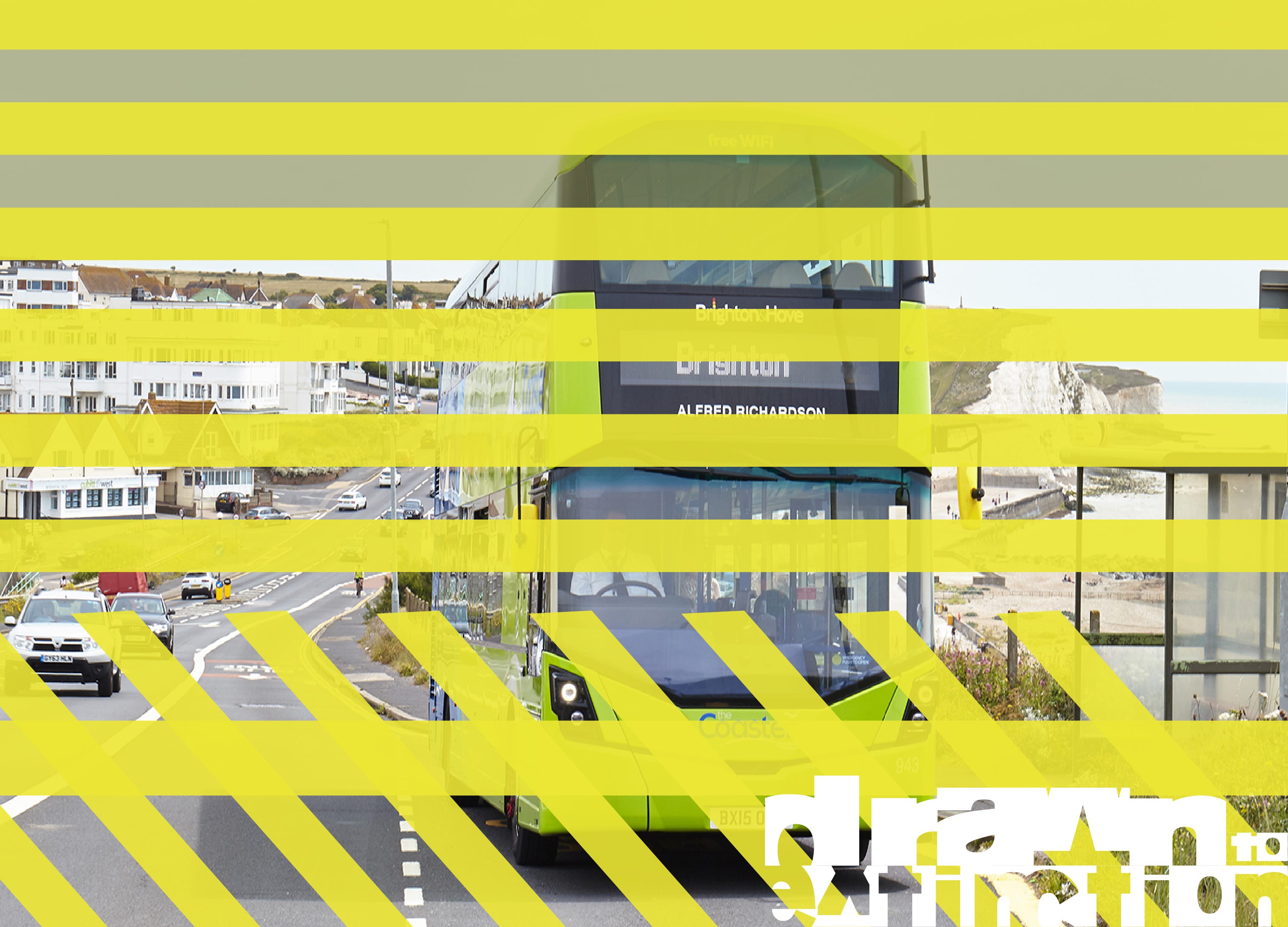
Dan Cornwell was driving a bus when John Wagner messaged him with the offer. That message, a single line asking if he liked football and could he draw it, was the result of years of rejected submissions, doodling between bus routes, and one particular afternoon on Brighton Pier with a pint in his hand asking himself what he was doing with his life.
Dan was meant to draw, and the bus he drove for years was just where he’d ended up while waiting to find the courage to try drawing again.
That story, from bus routes to Judge Dredd, only exists because the struggle existed first. The rejections. The gap between what Dan could imagine and what his hands could produce. The slow, private accumulation of craft that nobody sees until the day everything changes. “You can’t fake loose,” he told me, borrowing a line from Carlos Ezquerra. “That’s true for drawing and it’s true for life.”
Here’s what worries me about Ai; it’s not the technology, it’s the conditions.
Generative Ai doesn’t threaten the Dan Cornwells who already exist, it threatens the ones who haven’t started yet. The teenager right now with the same stubbornness and the same fire, who opens an app, types a prompt, and gets back something that looks more polished than anything three years of real effort would produce. What does that do to the three years? What does it do to the will to begin?
Research from Matt Beane at UC Santa Barbara shows this isn’t hypothetical in a study of surgical suites where robotic systems now handle the procedure, junior surgeons have become optional observers. The expert-novice bond, the mechanism through which skill actually transfers, has been severed. Entry-level tech job postings dropped 67% between 2023 and 2024, and the Society of Authors survey last year found a third of working writers had already lost income to Ai. Different industries, same severance.
The comics industry was built by outliers. People from buses and bakeries who drew through rejection because the alternative was unthinkable. Dan’s first year of professional income came to fourteen grand, and amount to pitiful that he had to tell his wife the taxman was giving them money back. That’s what sits behind the art.
“If you take the work away from people,” he told me, “you take away their reason to get better. And that’s when everything starts looking the same.”
Twenty-five years of watching people make things tells me the same. When someone is deep in a drawing, or a paragraph, or a page of sequential art that’s finally starting to work, something happens that has nothing to do with the output. We’ve all been there at some point when noise falls away, and the hours disappear. That state isn’t a side effect of making, it’s one of the reasons making matters. You can’t prompt your way into it. You can only get there through the long, repetitive, occasionally humiliating process of learning to do something with your own hands.
We’re removing the conditions that make that possible. Quietly. In the language of democratisation and creative empowerment, and a generation that never has to learn the differences between those two things is a generation that loses something it didn’t know it needed.